.png)
December 13, 2025
•
[rtime]
mins
Bill Walsh
At a glance
This edition is brought to you by The Code
Good morning to all new and old readers! Here is your Saturday edition of Faster Than Normal, exploring the stories, ideas, and frameworks of the world’s most prolific people and companies—and how you can apply them to build businesses, wealth, and the most important asset of all: yourself.
Today, we’re covering Bill Walsh and his journey to turning a 2–14 team into a Super Bowl dynasty and reshaping modern football.
If you enjoy this, feel free to forward along to a friend or colleague who might too. First time reading? Sign up here.
What you’ll learn:
How Bill Walsh turned a lifetime of setbacks Into a football dynasty
Lessons on focusing on the process, not the outcome, create a standard of performance and treat failure as data
Quotes on leadership, champions and culture
Cheers,
Alex
P.S. Send me feedback on how we can improve. We want to be worthy of your time. I respond to every email.
Bill Walsh
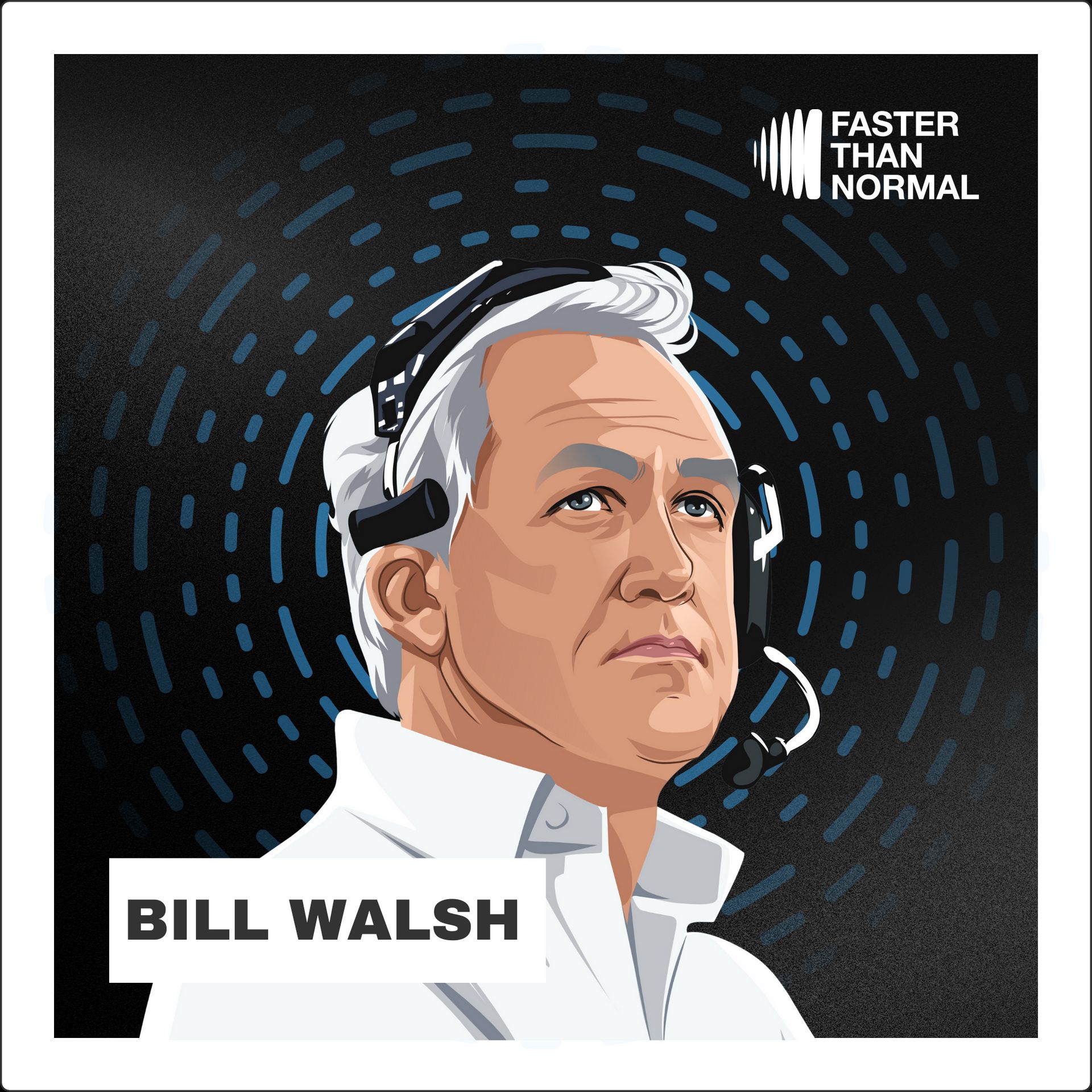
Bill Walsh grew up in a working-class family in California. His father was a laborer who moved the family frequently. This unstable childhood left its mark. "Having to be the new kid always destroyed me," Walsh once said.
He played football in high school and college but lacked the talent for a pro career. So Walsh turned to coaching. He started at the bottom - literally driving the team bus for a high school squad.
For years, Walsh bounced between assistant jobs. He even coached a semi-pro team at one point. John Madden recalled: "He was leaving pro football to coach semipro. I thought, 'You shouldn't be doing that,' but he wanted to be a head coach."
Walsh's big break seemed to come when he joined Paul Brown's staff with the Cincinnati Bengals. He spent 8 years there, developing a reputation as an offensive innovator. But when Brown retired, he passed Walsh over for the head coaching job. Devastated.
At age 47, Walsh finally got his shot as an NFL head coach with the lowly San Francisco 49ers in 1979. The team had gone 2-14 the previous year.
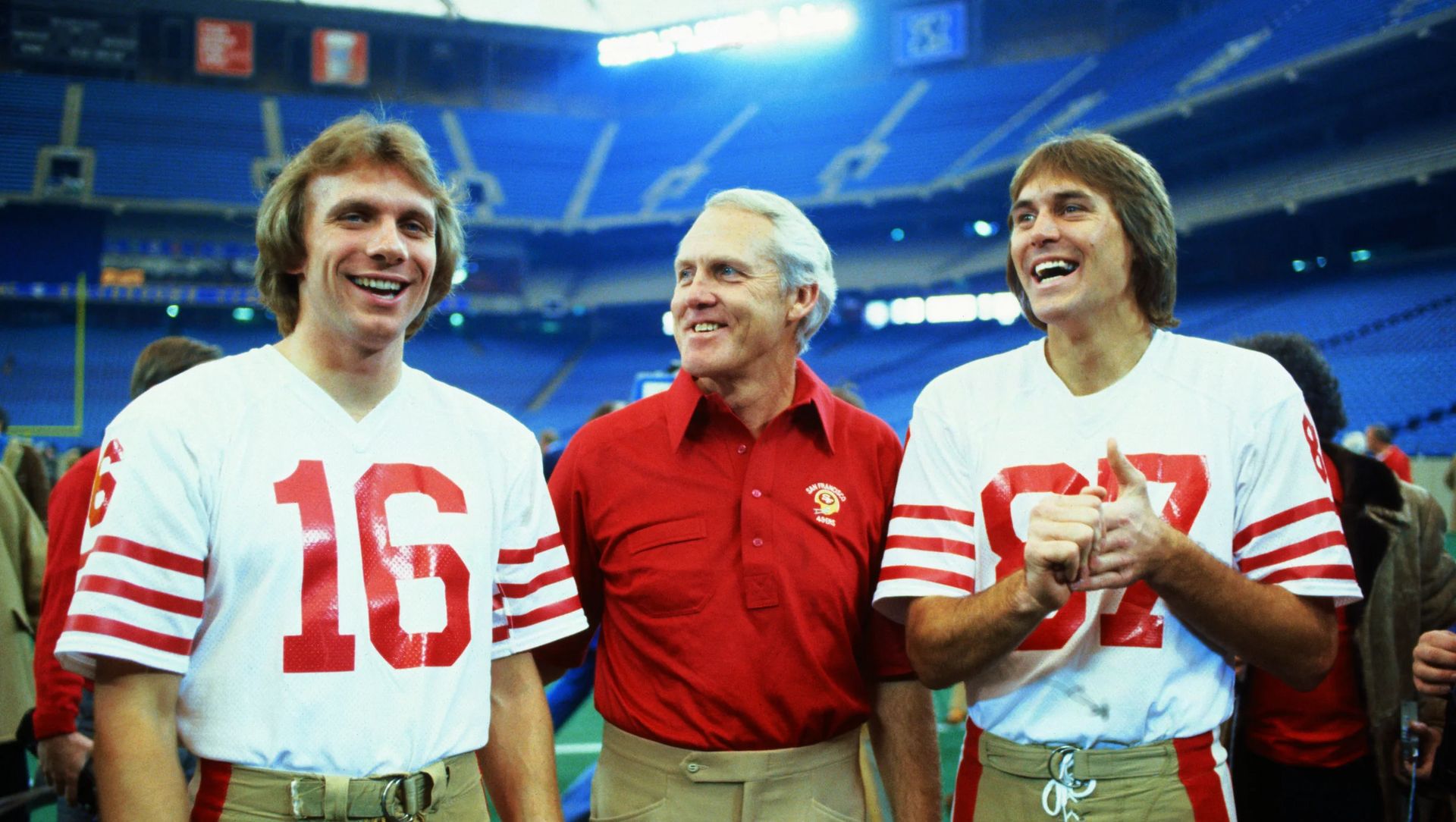
Walsh rebuilt the entire franchise from the ground up. He installed his revolutionary "West Coast Offense." He drafted wisely, nabbing future Hall of Famers like Joe Montana and Jerry Rice.
The results were staggering. In just 3 years, Walsh led the 49ers to their first ever Super Bowl victory. They would win two more under his guidance.
"Bill's legacy is going to be that he changed offense," said John Madden. "What offense is today is what Bill Walsh was."
Beyond the wins, Walsh left a lasting imprint on the NFL. He launched programs to create opportunities for minority coaches. His coaching tree spawned successful leaders like Mike Holmgren and Andy Reid.

Walsh stepped down in 1988 after a third Super Bowl win. He finished with a 102-63-1 record. Football immortality.
Yet Walsh remained humble. "There is no guarantee, no ultimate formula for success," he wrote. "However, a resolute and resourceful leader understands that there are a multitude of means to increase the probability of success."
From bus driver to Hall of Famer. Bill Walsh's story shows that with enough grit and ingenuity, anything can happen.
Lessons
Lesson 1: Focus on the process, not the outcome. Walsh's famous quote, "The score takes care of itself," isn't just a catchy phrase. It's a business philosophy. You can't control wins directly. But you can control how you practice, prepare, and execute. Walsh said, "I directed our focus less to the prize of victory than to the process of improving." This applies to startups too. Don't obsess over revenue or user numbers. Obsess over making your product better every day. The results will follow.
Lesson 2: Create a standard of performance. Walsh didn't just coach football. He created a system. Every player, coach, and staff member knew exactly what was expected of them. In detail. This wasn't just about football skills. It covered everything from how to answer the phone to how to dress. You should do the same. Define what excellence looks like in every part of your business. Then teach it relentlessly.
Lesson 3: Treat failure as data. Walsh's first season with the 49ers was terrible. 2 wins, 14 losses. But he didn't panic. He saw it as information. "Failure is part of success," he said. "Everybody gets knocked down. Knowing it will happen and what you must do when it does is the first step back." In your startup, don't fear failure. Learn from it. Iterate. Improve.
Lesson 4: Build a self-sustaining culture. Walsh's greatest achievement wasn't just winning. It was creating a winning culture that outlasted him. The 49ers won two more Super Bowls after he left. He said, "The trademark of a well-led organization in sports or business is that it's virtually self-sustaining and self-directed." Your job as a founder isn't just to lead. It's to create a culture that can thrive without you.
Lesson 5: Be willing to be misunderstood. Walsh's methods were often criticized. Especially early on. His pass-heavy offense was seen as soft. Unmanly, even. He ignored the critics. "Innovators are always resisted at first," he said. If you're doing something truly new, expect to be misunderstood. Maybe even mocked. Stick to your guns. Time will tell.
Find out why 100K+ engineers read The Code twice a week

Staying behind on tech trends can be a career killer.
But let’s face it, no one has hours to spare every week trying to stay updated.
That’s why over 100,000 engineers at companies like Google, Meta, and Apple read The Code twice a week.
Here’s why it works:
No fluff, just signal – Learn the most important tech news delivered in just two short emails.
Supercharge your skills – Get access to top research papers and resources that give you an edge in the industry.
See the future first – Discover what’s next before it hits the mainstream, so you can lead, not follow.
Join 100,000+ engineers who read The Code to stay ahead of the curve.
Bill Walsh Quotes
On leadership: "The difference between offering an opinion and making a decision is the difference between working for the leader and being the leader."
On champions: "Champions behave like champions before they're champions; they have a winning standard of performance before they are winners."
On culture: "Your enthusiasm becomes their enthusiasm; your lukewarm presentation becomes their lukewarm interest in what you're offering."
On focus: "Concentrate on what will produce results rather than on the results, the process rather than the prize."
On leadership: "Others follow you based on the quality of your actions rather than the magnitude of your declarations."
On preparation: "If you don't have the tools, you can't do the job. If you don't know how to use the tools, they're useless."
On excellence: "Strive for perfection, settle for excellence."
On teamwork: "The ability to help the people around me self-actualize their goals underlines the single aspect of my abilities and the label that I value most—teacher."
On vision: "A leader's job is to facilitate a battlefield for ideas and then let the best ideas win."
Speeches
Book Recommendations
Further Readings
That’s all for today, folks. As always, please give me your feedback. Which section is your favourite? What do you want to see more or less of? Other suggestions? Please let me know.
Have a wonderful rest of week, all.
Recommendation Zone
⎯
Build Global Teams, Save Smart
Hiring remote talent has been one of the most impactful decisions I’ve made, supporting everything from marketing and customer support to operations and admin.
I’ve used Athyna, a global talent platform that helps companies quickly hire top professionals from talent-rich regions like Latin America, Southeast Asia, and Africa — often delivering up to 70% cost savings. They move fast (under 5 days), and cover roles across engineering, marketing, design, and ops.
Athyna sources talent from companies like Facebook, Uber, Zoom, and Salesforce, so you’re not sacrificing quality, just unlocking global efficiency. Highly recommend giving them a look.


Alex Brogan
Find me on X, LinkedIn, YouTube, Instagram, TikTok
Offshore Talent: Where to find the best offshore talent. Powered by Athyna.
Why Faster Than Normal? Our mission is to be a friend to the ambitious, a mentor to the becoming, and a partner to the bold. We achieve this by sharing the stories, ideas, and frameworks of the world's most prolific people and companies—and how you can apply them to build businesses, wealth, and the most important asset of all: yourself.
Faster Than Normal is a ‘state' of being’ rather than an outcome. Outlier performance requires continuous, compounded improvement. We’re your partner on this journey.
Send us your feedback and help us continuously improve our content and achieve our mission. We want to hear from you and respond to everyone.
Interested in reaching Founders, Operators, and Investors like you? To become a Faster Than Normal partner, apply here.
Share the Faster Than Normal newsletter


.png)


