

The Evidence Framework
How to build unshakeable confidence
Most high performers suffer from the same delusion: they believe confidence alone will carry them to their goals. They mistake feeling certain for being prepared. This is expensive thinking.
Evidence trumps confidence every time. Not because confidence is worthless — studies confirm the link between self-belief and performance — but because unsubstantiated confidence is a liability masquerading as an asset.
The Detective's Dilemma
Consider the detective who spots a suspicious figure on security footage near a crime scene. The man lurks by a streetlamp, carries a backpack, drives toward the apartment complex where a murder occurred. The detective's instinct screams: "He did it."
But instinct isn't evidence. The supervisor's response cuts through wishful thinking: "Come back when you have actual evidence."
This distinction matters more than most founders realize. Confidence is certainty about an outcome. Evidence is proof you can deliver that outcome. One is feeling. The other is fact.
When Confidence Becomes Costly
The entrepreneur who declares "I'm going to build a wildly successful business" without market knowledge, funding, or prior experience isn't confident — they're reckless. They've confused belief with capability.
Overconfidence costs time and capital. It leads to launching without validation, hiring without systems, scaling without unit economics. The wreckage of overconfident ventures litters Silicon Valley.
This is where humility becomes strategic. Not self-deprecation or false modesty, but realistic assessment of your capabilities. Humility means consulting industry experts, identifying skill gaps, acknowledging what you don't know.
You don't undermine your successes to be humble. You interpret them accurately.
Building Your Evidence Bank
The solution isn't to abandon ambitious goals. It's to collect evidence before pursuing them.
Want to write a bestselling novel? Don't start with delusional confidence about your literary genius. Build evidence:
- Join writers' workshops to test your craft
- Research market dynamics for your genre
- Study successful authors' paths to publication
- Complete smaller writing projects first
Each step accumulates proof of your developing capability.
Planning to launch a startup? Evidence looks like:
- Conducting customer discovery interviews
- Building and testing an MVP
- Securing initial funding or pre-orders
- Assembling an advisory board
- Demonstrating traction metrics
These aren't just preparation steps. They're evidence that you can execute what you envision.
The power lies in transferability. Evidence from one domain strengthens confidence in adjacent challenges. The discipline that built your first successful product becomes proof you can build the second. The persistence that got you through medical school validates your ability to navigate startup hardships.
Evidence Compounds Into Confidence
This isn't about choosing evidence over confidence. It's about understanding their relationship: evidence generates sustainable confidence.
When you accumulate proof of capability, confidence follows naturally. The longer your evidence list, the stronger your foundation. More importantly, evidence-based confidence survives setbacks that destroy wishful thinking.
The detective who initially relied on hunches eventually gathered real proof: license plate numbers, database matches, witness statements. Each piece of evidence built toward conviction. The confession came because the groundwork was solid.
Your career operates the same way. Small evidence compounds into larger opportunities. The side project that generates modest revenue becomes proof you can build products people want. The team that follows your lead through one crisis demonstrates your ability to navigate the next.
The Framework in Practice
Apply this systematically. Start with your most ambitious goal — the one that feels intangible, slightly out of reach.
First, audit your existing evidence. What skills, experiences, or qualities already support this goal? Hard work, resilience, and pattern recognition count. So do specific achievements, however small.
Second, identify gaps honestly. Which capabilities are you lacking? What prevents you from developing them? This isn't self-flagellation; it's strategic planning.
Third, design evidence-gathering activities. Choose concrete steps that build both skill and proof simultaneously. Each action should move you toward your goal while demonstrating your growing competence.
Finally, document everything. Your evidence bank becomes a resource for moments of doubt and a foundation for bigger bets.
The Compound Effect
Evidence doesn't just enable individual goals. It changes how you approach ambition itself. Instead of hoping your way to success, you build your way there. Instead of betting everything on belief, you accumulate proof of concept.
The detective who learned to gather evidence before drawing conclusions becomes better at solving future cases. The founder who builds evidence before scaling becomes better at identifying real opportunities.
That's the whole trick: evidence breeds confidence, which enables bigger evidence-gathering activities, which generates stronger confidence. The cycle compounds.
Confidence without evidence is expensive. Evidence without confidence is incomplete. But evidence that transforms into confidence? That's how careers are built.
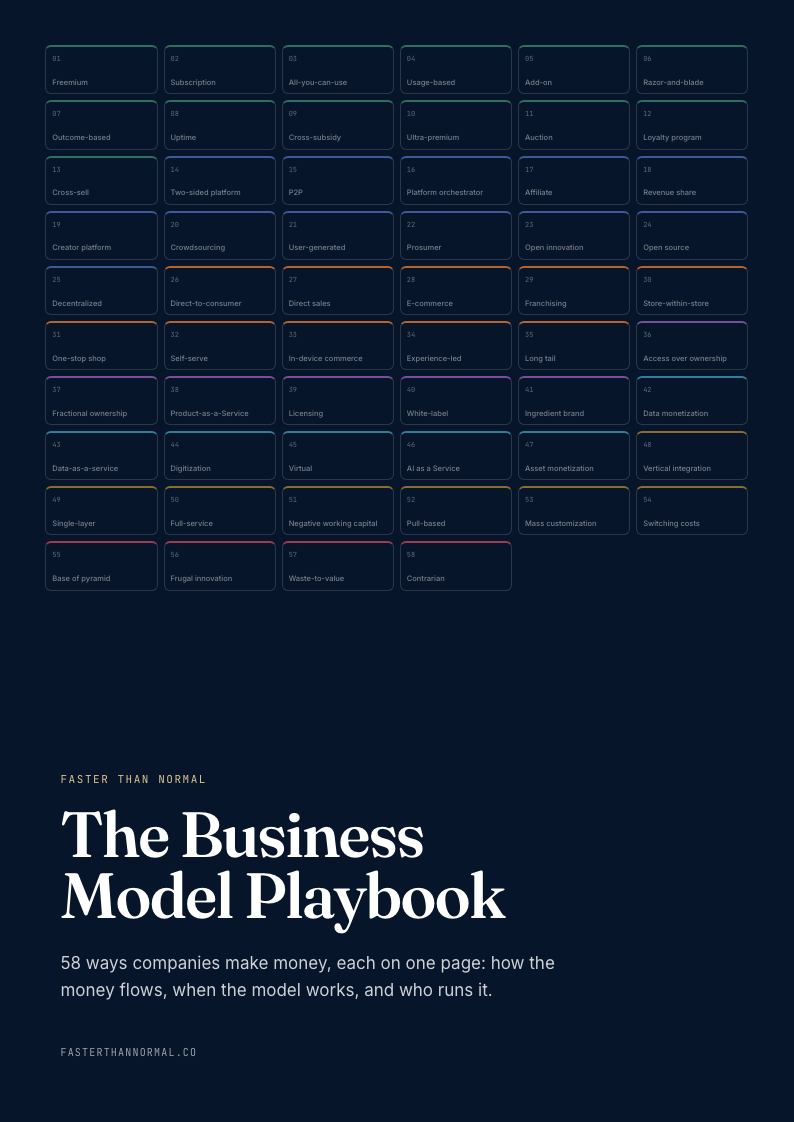
Free playbook
Get The Business Model Playbook
58 business models, one visual page each: how the money flows, the metrics that matter, and who runs it. Free when you join the Faster Than Normal email.
Free. No spam. Unsubscribe anytime.