.png)
January 3, 2026
•
[rtime]
mins
Hermès
At a glance
This edition is brought to you by The Last Invention
Good morning to all new and old readers! Here is your Saturday edition of Faster Than Normal, exploring the stories, ideas, and frameworks of the world’s most prolific people and companies—and how you can apply them to build businesses, wealth, and the most important asset of all: yourself.
Today, we’re covering Hermès and their journey from a humble harness shop to a global luxury icon..
If you enjoy this, feel free to forward along to a friend or colleague who might too. First time reading? Sign up here.
What you’ll learn:
How did Hermès evolve from saddles and bridles into timeless luxury
Lessons on scarcity creates desire, don't chase trends and patience is a virtue in business
Cheers,
Alex
P.S. Send me feedback on how we can improve. We want to be worthy of your time. I respond to every email.
Hermès
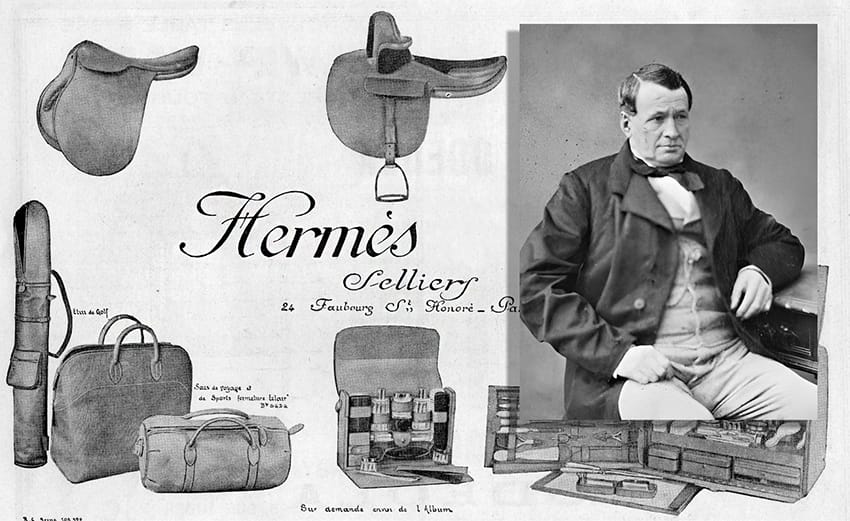
Thierry Hermès didn't start with much. Born in 1801 to a French father and German mother, he lost his family to disease and war as a young man. Orphaned and alone, he moved to Paris in 1821 with little more than his skill in leatherworking.
"I had nothing but my hands and my determination," Thierry once said.
Those hands would prove invaluable. In 1837, Thierry opened a small harness workshop in Paris, catering to European noblemen. His stitching technique was unique - done entirely by hand using two needles and waxed linen thread. The quality was unmatched.
But it wasn't easy. Thierry worked long hours, often sleeping in his workshop. Competition was fierce. Many doubted a German-born craftsman could succeed in Paris's elite circles.
They were wrong.
Thierry's harnesses and bridles gained a reputation for exceptional quality. Awards followed. First prize at the 1855 Exposition Universelle in Paris. Again in 1867.
"Quality is the key," Thierry insisted. "It opens every door."
By 1880, Thierry's son Charles-Émile had taken over, moving the shop to 24 Rue du Faubourg Saint-Honoré. Smart move. The new location put Hermès in the heart of Parisian high society.
Then came cars. Horse-drawn carriages were disappearing. The business could have collapsed.
It didn't.
Charles-Émile's sons, Adolphe and Émile-Maurice, saw opportunity. They expanded into leather accessories and clothing. In 1918, they introduced the first Hermès wristwatch. In 1922, the first leather handbag.
"We don't just sell products," Émile-Maurice said. "We sell dreams."
Those dreams proved resilient. Through wars and economic turmoil, Hermès endured. By the 1950s, its silk scarves and ties were iconic. Grace Kelly made the "Kelly" bag famous. Later came the legendary Birkin.
Today, Hermès is worth over $200 billion. Its bags can command waitlists years long. Not bad for a small harness shop.
"We are still craftsmen at heart," says current CEO Axel Dumas. "That will never change."
The secret? Unwavering commitment to quality. Refusal to compromise. And perhaps most importantly - patience.
"Time is our greatest luxury," Jean-Louis Dumas once said. "And our greatest asset."
Lessons
Lesson 1: Scarcity creates desire. You can't just walk into a Hermès store and buy a Birkin bag. There's a waitlist. Sometimes years long. This isn't an accident. It's strategy. By limiting supply, Hermès has turned its bags into objects of extreme desire. "We create frustration. But we create frustration with a smile," says CEO Axel Dumas. This artificial scarcity has made Hermès bags more valuable than gold in terms of investment returns.
Lesson 2: Don't chase trends. You might be tempted to follow every fashion trend. Don't. Hermès has stayed relevant for nearly two centuries by focusing on timeless design. "We don't have a marketing strategy, we have a product strategy," says CEO Axel Dumas. This approach has made their products enduring status symbols, not fleeting fashion statements.
Lesson 3: Patience is a virtue in business. Hermès thinks in generations, not quarters. They're willing to wait for the right opportunity. When they launched their first perfume, they spent 15 years developing it. "Time is our greatest luxury," Jean-Louis Dumas once said. This long-term view allows them to make decisions that might seem counterintuitive in the short term, but pay off hugely over time.
When Machines Begin to Think
For years, I’ve studied AI up close—its breakthroughs, its blind spots, and the ways it’s steadily reshaping how we live and work.
I wrote The Last Invention to connect the dots between today’s progress and tomorrow’s possibilities. It’s an exploration of how artificial intelligence might change work, economics, and our understanding of intelligence itself.
If you’re curious about where this all leads, I wrote it to give a clear, human view of the world that’s taking shape.
If you’ve found value in my writing, please consider supporting my work by ordering the ebook on Gumroad or Amazon. I think you’ll genuinely enjoy it.
Speeches and Interviews:
Book Recommendations
Further Readings
Hermès - The Strategy Insights Behind The Iconic Luxury Brand
Continued brand heat drives growth at Hermès | Vogue Business
Hermès: The Complete History and Strategy - Acquired Podcast
Analysis on the Marketing Strategy of Hermes - Atlantis Press
That’s all for today, folks. As always, please give me your feedback. Which section is your favourite? What do you want to see more or less of? Other suggestions? Please let me know.
Have a wonderful rest of week, all.
Recommendation Zone
⎯
Build Global Teams, Save Smart
Hiring remote talent has been one of the most impactful decisions I’ve made, supporting everything from marketing and customer support to operations and admin.
I’ve used Athyna, a global talent platform that helps companies quickly hire top professionals from talent-rich regions like Latin America, Southeast Asia, and Africa — often delivering up to 70% cost savings. They move fast (under 5 days), and cover roles across engineering, marketing, design, and ops.
Athyna sources talent from companies like Facebook, Uber, Zoom, and Salesforce, so you’re not sacrificing quality, just unlocking global efficiency. Highly recommend giving them a look.


Alex Brogan
Find me on X, LinkedIn, YouTube, Instagram, TikTok
Offshore Talent: Where to find the best offshore talent. Powered by Athyna.
Why Faster Than Normal? Our mission is to be a friend to the ambitious, a mentor to the becoming, and a partner to the bold. We achieve this by sharing the stories, ideas, and frameworks of the world's most prolific people and companies—and how you can apply them to build businesses, wealth, and the most important asset of all: yourself.
Faster Than Normal is a ‘state' of being’ rather than an outcome. Outlier performance requires continuous, compounded improvement. We’re your partner on this journey.
Send us your feedback and help us continuously improve our content and achieve our mission. We want to hear from you and respond to everyone.
Interested in reaching Founders, Operators, and Investors like you? To become a Faster Than Normal partner, apply here.
Share the Faster Than Normal newsletter


.png)


